

Rules of
Parliamentary Procedure
Click here for the full Guide to Delegate Preparation and Parliamentary Procedure for HNMUN 2027. Continuing reading for an overview of some of the most important rules. This is by no means comprehensive or exhaustive—all delegates should be well versed in the full rules of procedures before arriving in committee to ensure more streamlined and efficient debate. More information about unique committee mechanics (e.g. Press Corps) can be found in the committee background guide.
General Parliamentary Procedure and Rules
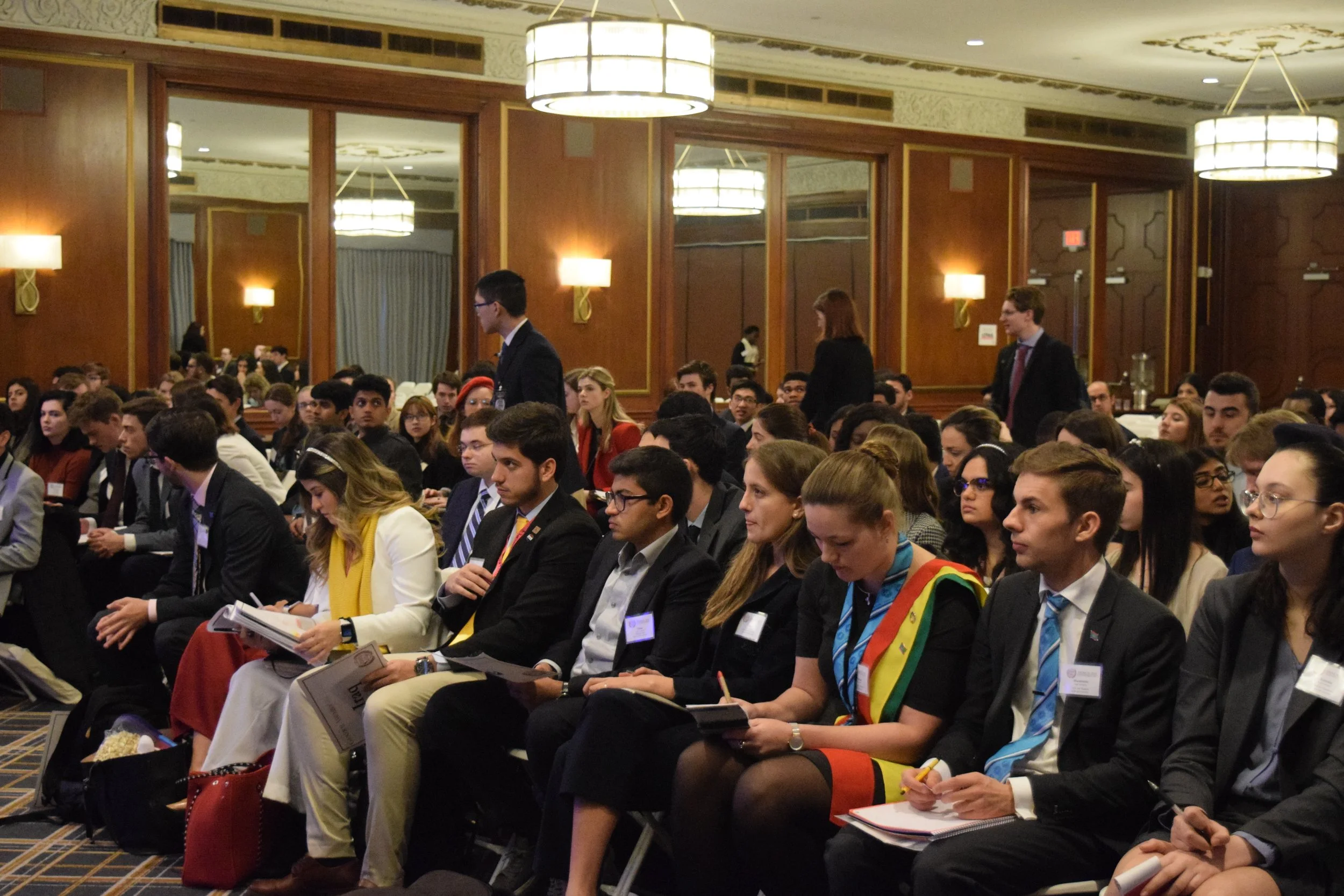
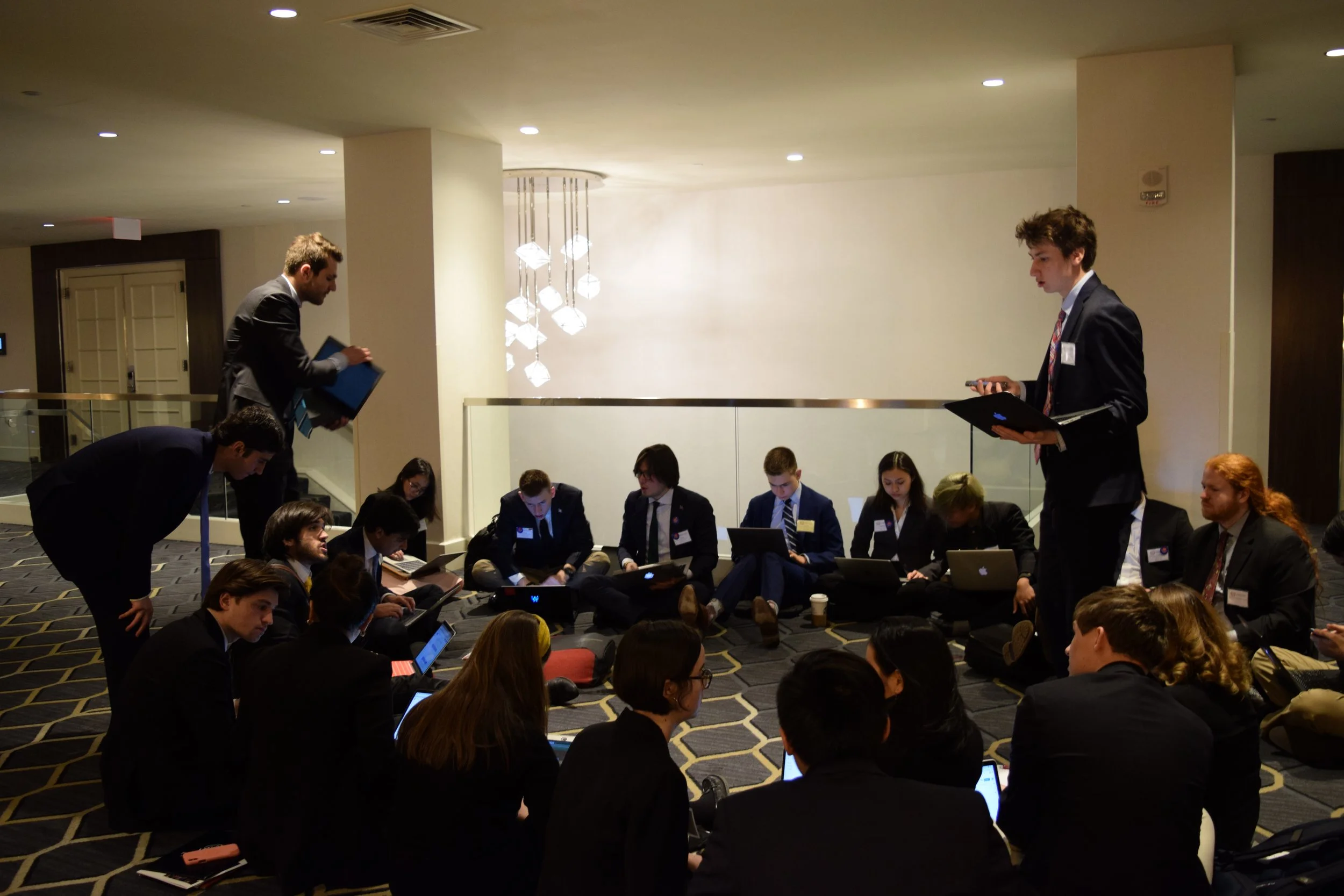
Each committee will led by a Director, Moderator, and Assistant Directors. Crisis committees will also have a Crisis Director who oversees crises in those committees
No prewritten work of any kind is allowed
This means that working papers, draft resolutions, and crisis notes are not allowed to be written outside of committee sessions
Motions are formal proposals to do something in committee
For example, a delegate may make a motion to open debate, start a moderated caucus, and table (pause) debate
These are accepted at the discretion of the director and voted on by the entire committee
Unlike motions, points are more personal and directed toward the dais. There are three types of points that are used at HNMUN:
Point of Personal Privilege
Used when a delegate is experiencing discomfort or has a special request such as leaving the committee room
Point of Order
Used to bring attention to improper parliamentary procedure
Point of Parliamentary Inquiry
Used when a delegate is unclear about a specific aspect of parliamentary procedure
Phrased in the form of a question to the dais
Resolution-style committees
GA and ECOSOC committees have similar procedures as they are resolution-style committees. Detailed below is the general flow of committee and things that all GA/ECOSOC delegates should be aware of.
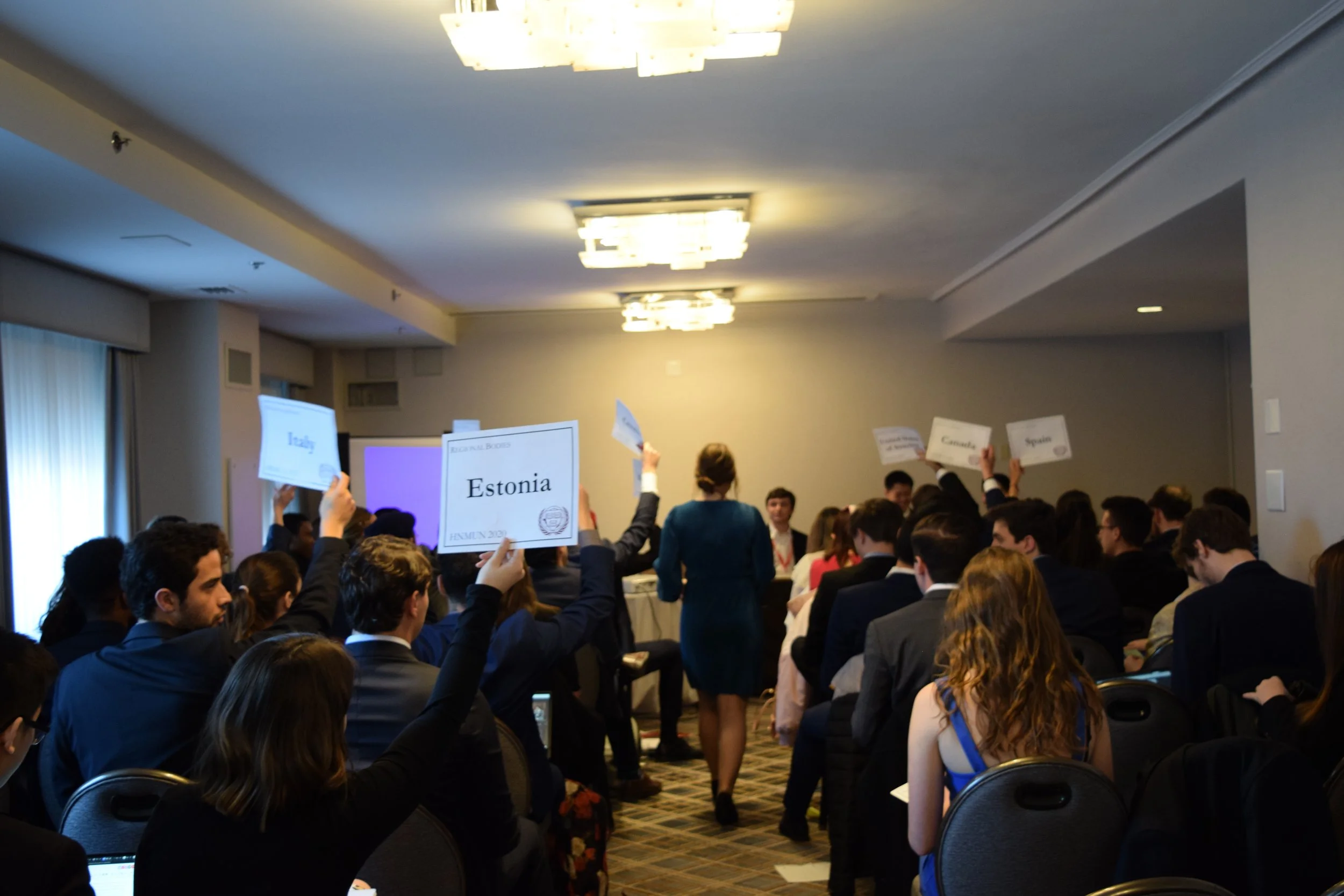
Each Committee will start with the General Speaker’s List, which is the delegates’ opportunity to share their delegation’s stance on the topic
Later on in the round, if no motions pass, the committee will return to the General Speaker’s List by default
Moderated Caucuses are structured debates about a certain topic
When making a motion for a moderated caucus, you must include the speaking time of each speaker (e.g. 1 minute, 45 seconds) and the topic speeches should be about
Unmoderated Caucuses are unstructured debates where delegates are allowed to walk around and talk to other delegates
When making a motion for an unmoderated caucus, you simply state the time duration (e.g. 10 minutes)
Working papers are documents that contain ideas about potential solutions to the problem at hand in committee
Working papers are collaborative and require that delegates form allies or blocs
The time and number of working papers that will be accepted is up to the director’s discretion
Working papers will be presented by the bloc followed by a Q&A session where the committee may ask questions about the working paper
Resolutions are documents that merge together the ideas of two or more working papers that have been presented to the committee
The “Questions a Resolution Must Answer” section of the committee background guide will provide guidance on what the resolution must address
Resolutions will have a certain number of co-sponsors and signatories that will be determined and announced by the director
The time and number of resolutions that will be accepted is up to the director’s discretion
Resolutions will be presented by the bloc followed by a Q&A session where the committee may ask questions about the resolution

Directive-Style committees
Crisis committees are quite different from GA and ECOSOC committees. Detailed below is the general flow of committee and things that all crisis delegates should be aware of. Directive-style committees will follow a similar flow to crisis committees without the element of crisis notes.
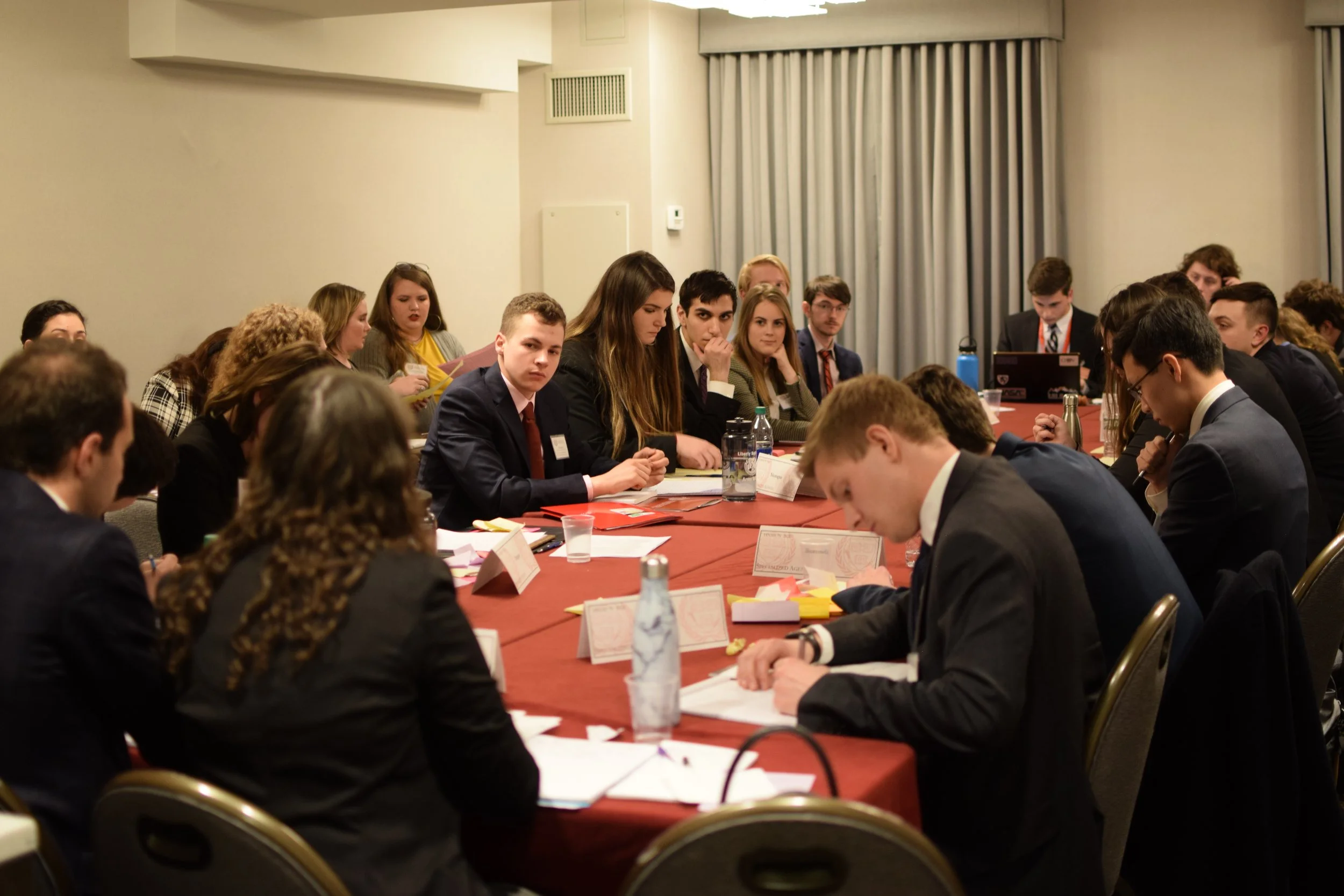
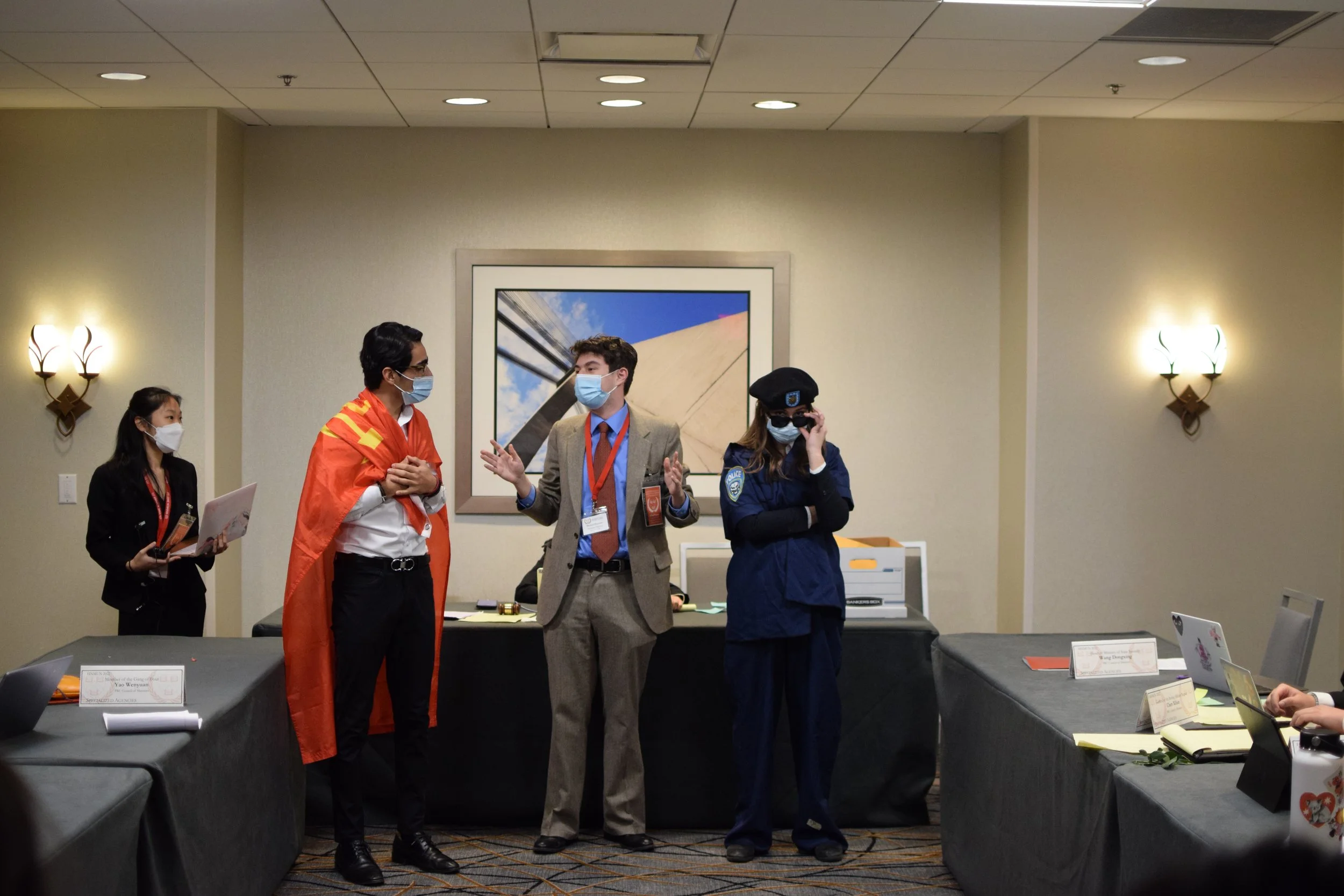
Instead of representing countries, delegates represent characters
Crisis committees will not use a Speakers list and instead rely on moderated caucuses for formal debate
Directives are documents that delegates must pass, which depending on the committee, can take on different forms, such as statements, decisions, and military commands
Crisis breaks are updates planned by the dais that highlight different issues the committee faces
Timed crisis breaks require delegates to introduce and pass a directive before a deadline to stop the crisis from escalating before a deadline
Untimed crisis breaks do not have deadlines but have the potential to escalate over the course of the session at the discretion of the dais
Crisis notes are notes written to the crisis staff aimed at furthering a delegate’s individual character goals in committee
Crisis notes have the ability to help or sabotage other delegates, increase one’s standing in committee, and/or shift the trajectory of committee
Notes should be written in the form of a letter, addressed to individuals or organizations not represented in the committee, and contain concise commands
Notes should be written to individuals or organizations that have a realistic relationship with the delegate’s character
Moderated caucuses follow the same rules as those in GA and ECOSOC committees
Unmoderated caucuses are to be used for working on directives and reacting to crisis breaks